

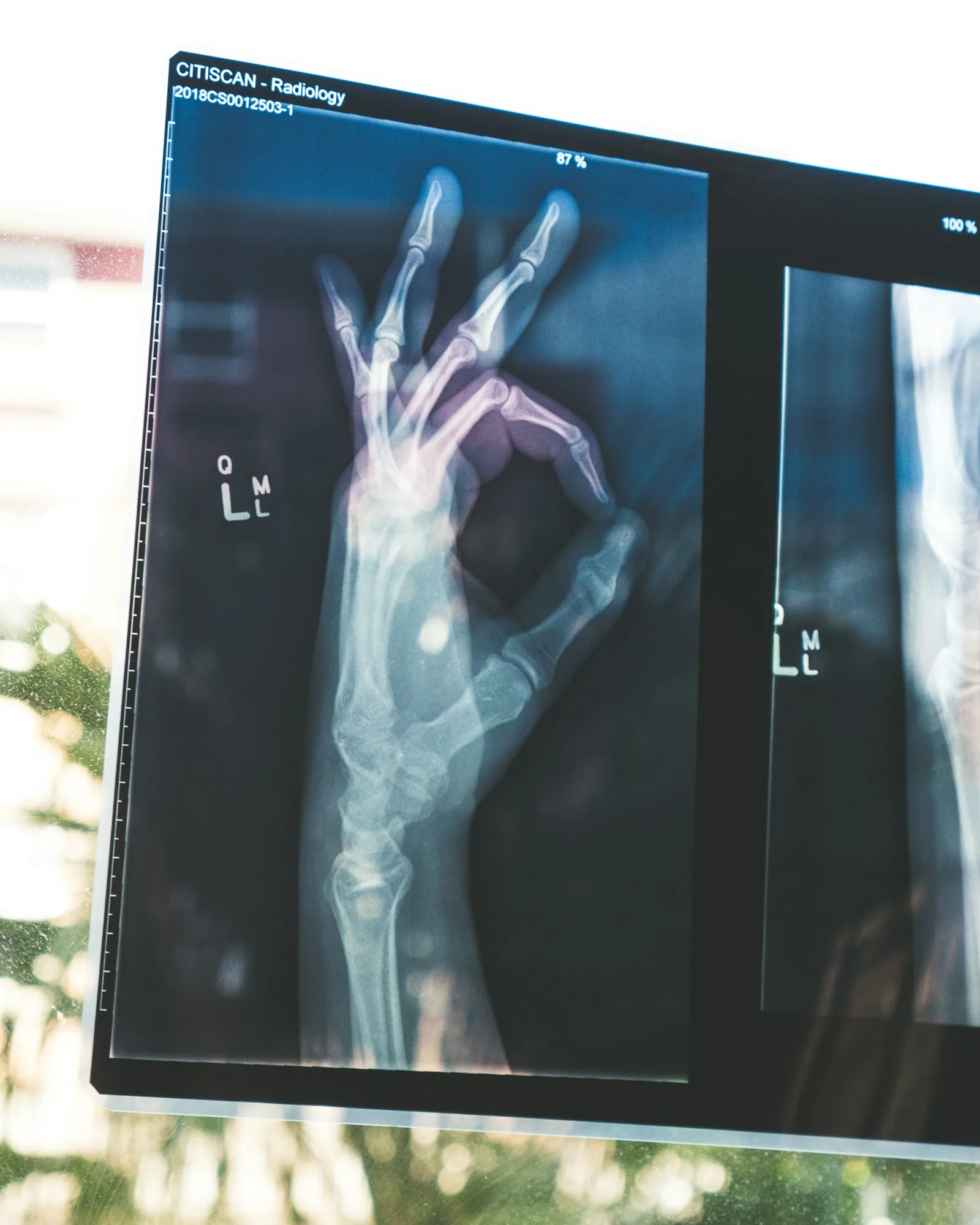
A herniated disc is one of the most common causes of neck pain, back pain, and radiating leg or arm pain. At Blue Spine, we treat herniated discs using patented minimally invasive techniques that most patients never thought possible, without general anesthesia, without large incisions, and with same-day discharge.
What Is a Herniated Disc?
Your spine is made up of vertebrae separated by spinal discs. Each disc has a tough outer layer called the annulus fibrosus and a soft gel-like center called the nucleus pulposus. When the outer layer weakens or tears, the inner material can push through, this is a herniated disc.
The herniated material can press on nearby nerve roots or the spinal cord itself, causing a range of symptoms depending on which disc is affected and which nerves are involved.
Symptoms
Symptoms of a herniated disc vary depending on location and severity:
- Sharp or burning pain in the lower back, neck, or mid-back
- Pain that radiates into the arms, legs, or buttocks
- Numbness or tingling in the extremities
- Muscle weakness in the arms or legs
- Pain that worsens with sitting, bending, or coughing
- In severe cases, loss of bladder or bowel control
Causes
Several factors contribute to disc herniation:
- Age-related degeneration is the most common cause. Discs lose water content and flexibility over time, making them more prone to tearing.
- Repetitive strain from lifting, twisting, or bending can weaken disc walls over time.
- Sudden injury from a fall, accident, or heavy lift can cause immediate herniation.
- Genetics play a role, as some people inherit a predisposition to disc problems.
Diagnosis
Accurate diagnosis requires a thorough evaluation including:
- Complete medical history and physical examination
- MRI scan to visualize the disc and surrounding nerves
- CT scan or myelogram in some cases
- Nerve conduction studies if nerve damage is suspected
Treatment Options
Most herniated discs are treated initially with conservative measures including physical therapy, anti-inflammatory medications, and targeted injections. When conservative treatment fails to provide relief after six to twelve weeks, surgical intervention may be appropriate.
At Blue Spine, surgical treatment for herniated disc is performed using minimally invasive techniques under local anesthesia. The most common procedure for a herniated disc is a discectomy, which removes the herniated material pressing on the nerve.
Why Choose Blue Spine for Herniated Disc Treatment?
Our patented approach offers significant advantages over conventional spine surgery. Patients remain awake under local anesthesia, able to communicate with their surgeon throughout the procedure. This real-time feedback allows for greater precision and a higher standard of safety than general anesthesia allows.
Most patients experience immediate pain relief and walk out of our facility the same day.